At-home blood testing: ad angles by awareness stage
Each angle is a reason to act, written for one awareness stage. Grey chips mark where a brand's own detail goes. The hooks for every angle are on the hooks page.
Unaware
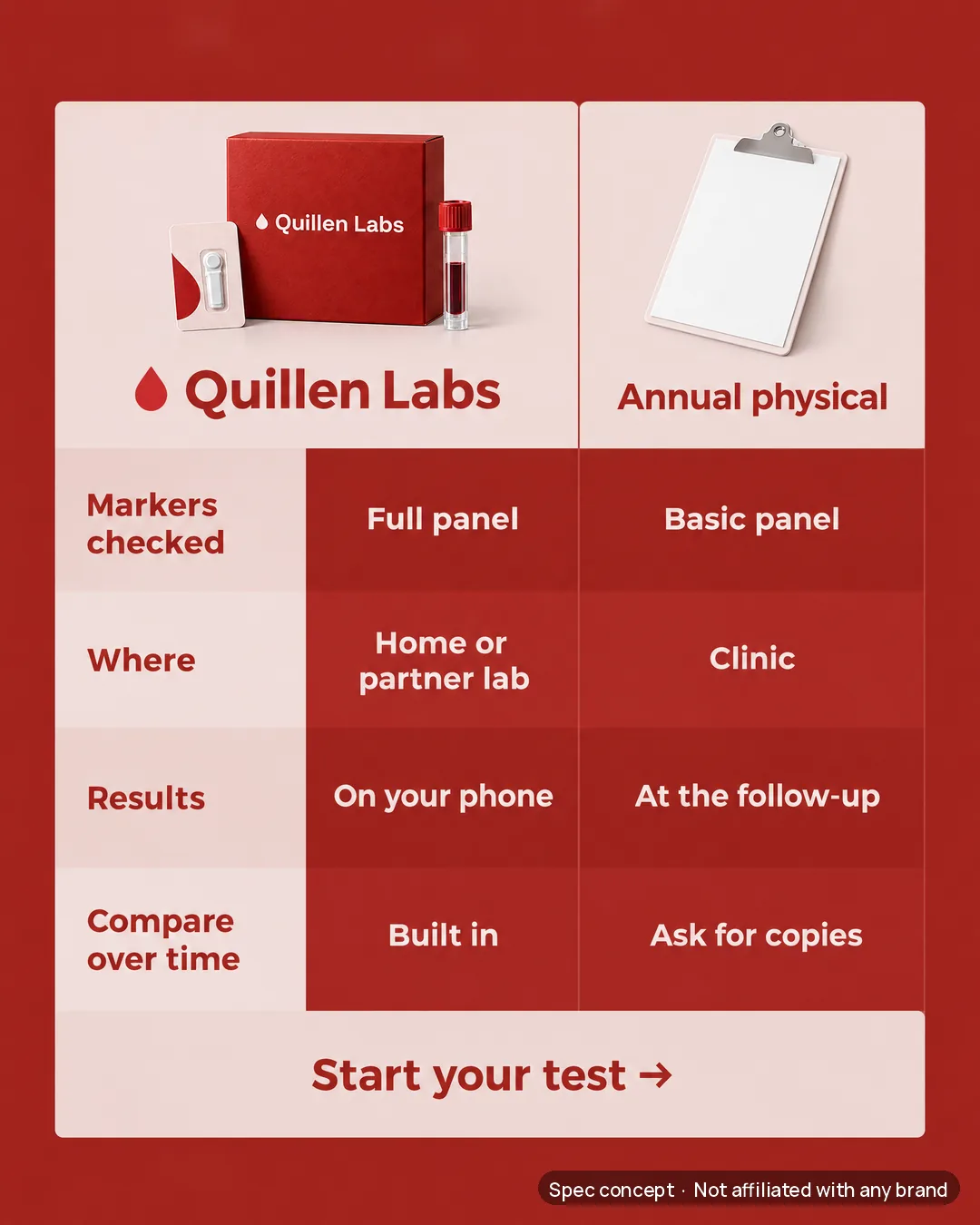
What a standard physical checks
- Stage:
- Unaware
- Core desire:
- Know more than the basics
- Objection:
- My doctor already tests me
- Hook:
- A standard yearly blood panel checks fewer things than most people think.
The markers people skip
- Stage:
- Unaware
- Core desire:
- Curiosity
- Mechanism:
- Category education about common markers.
- Objection:
- I don't know what to test
- Hook:
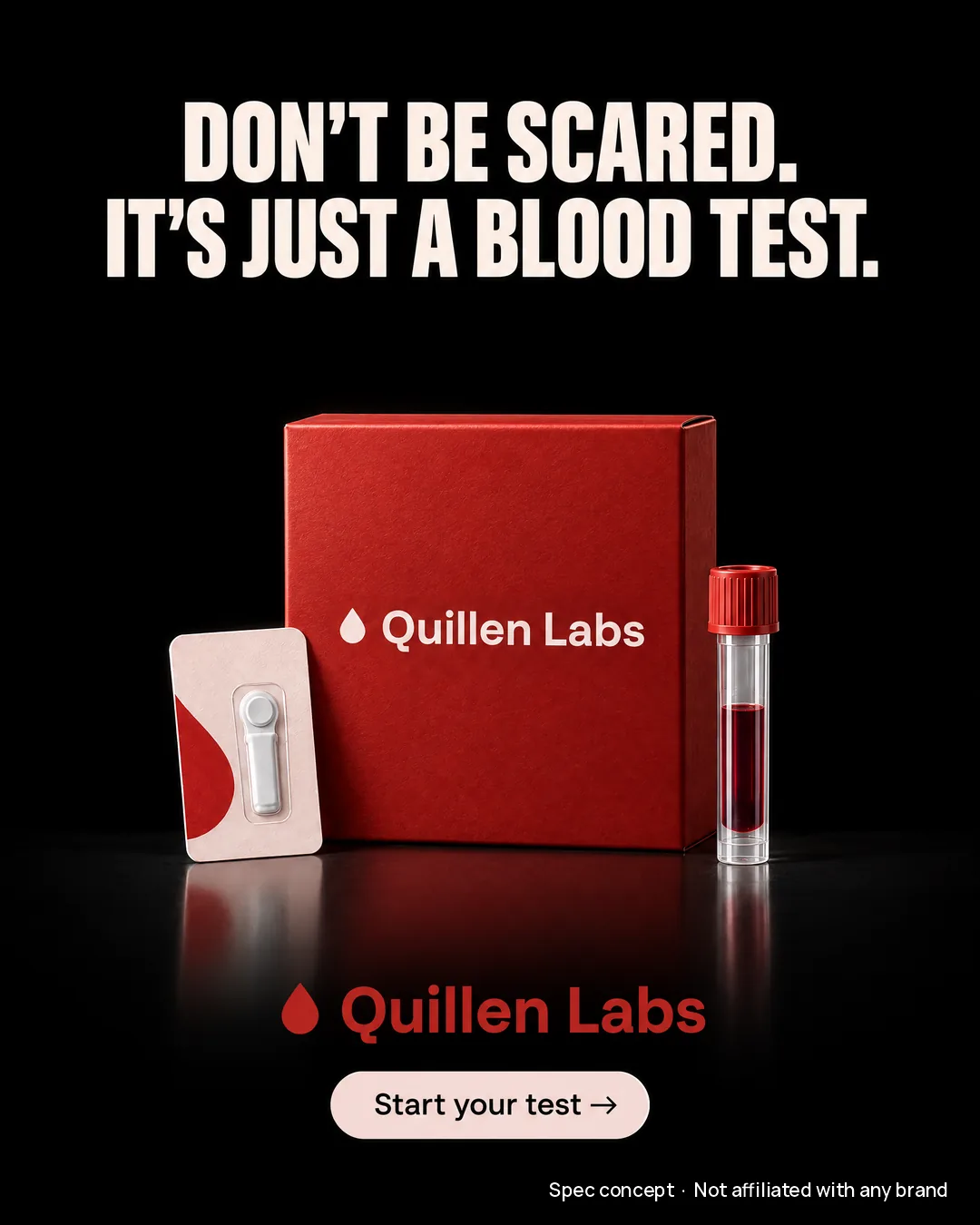
- Five blood markers most people have never had checked.
Problem aware
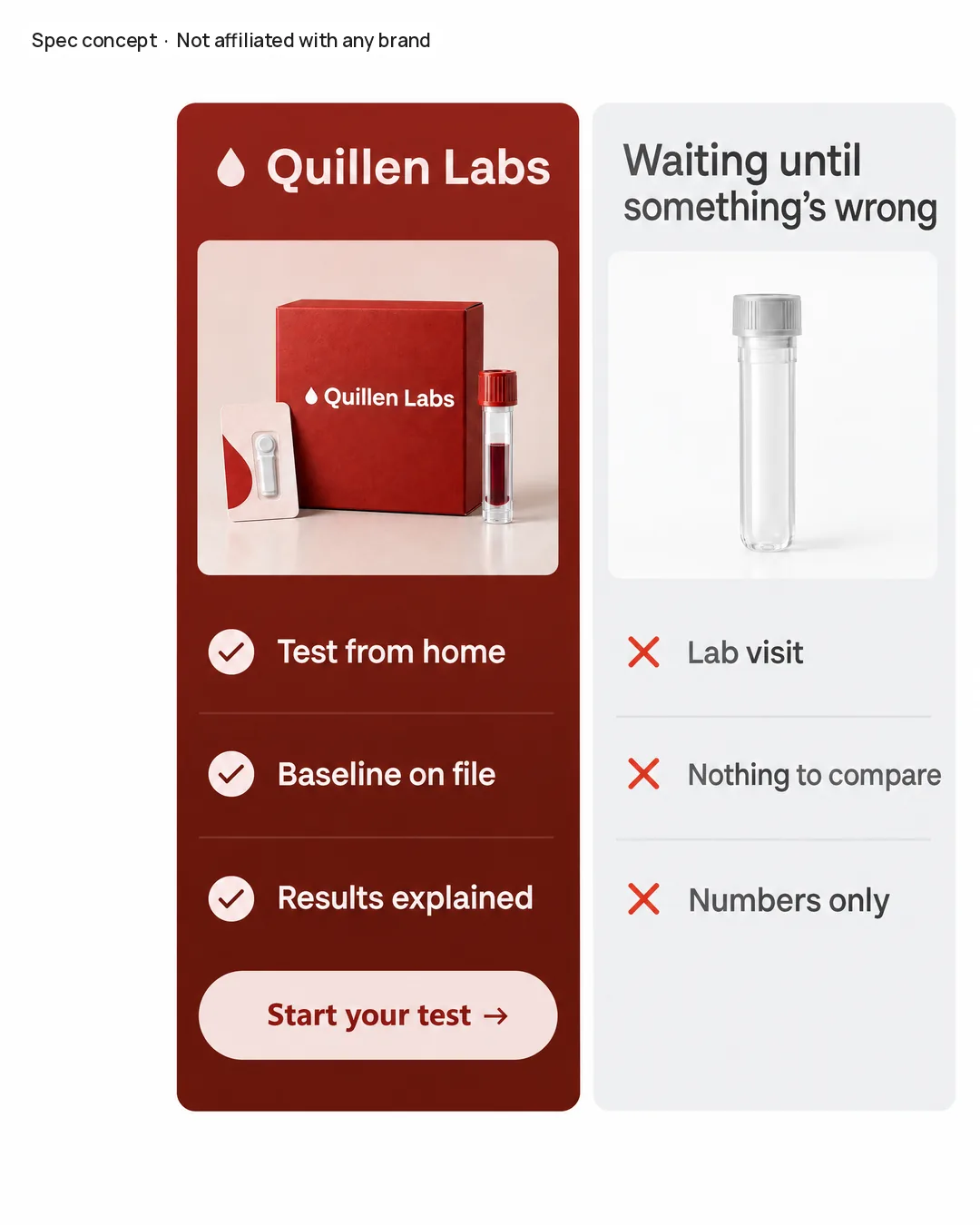
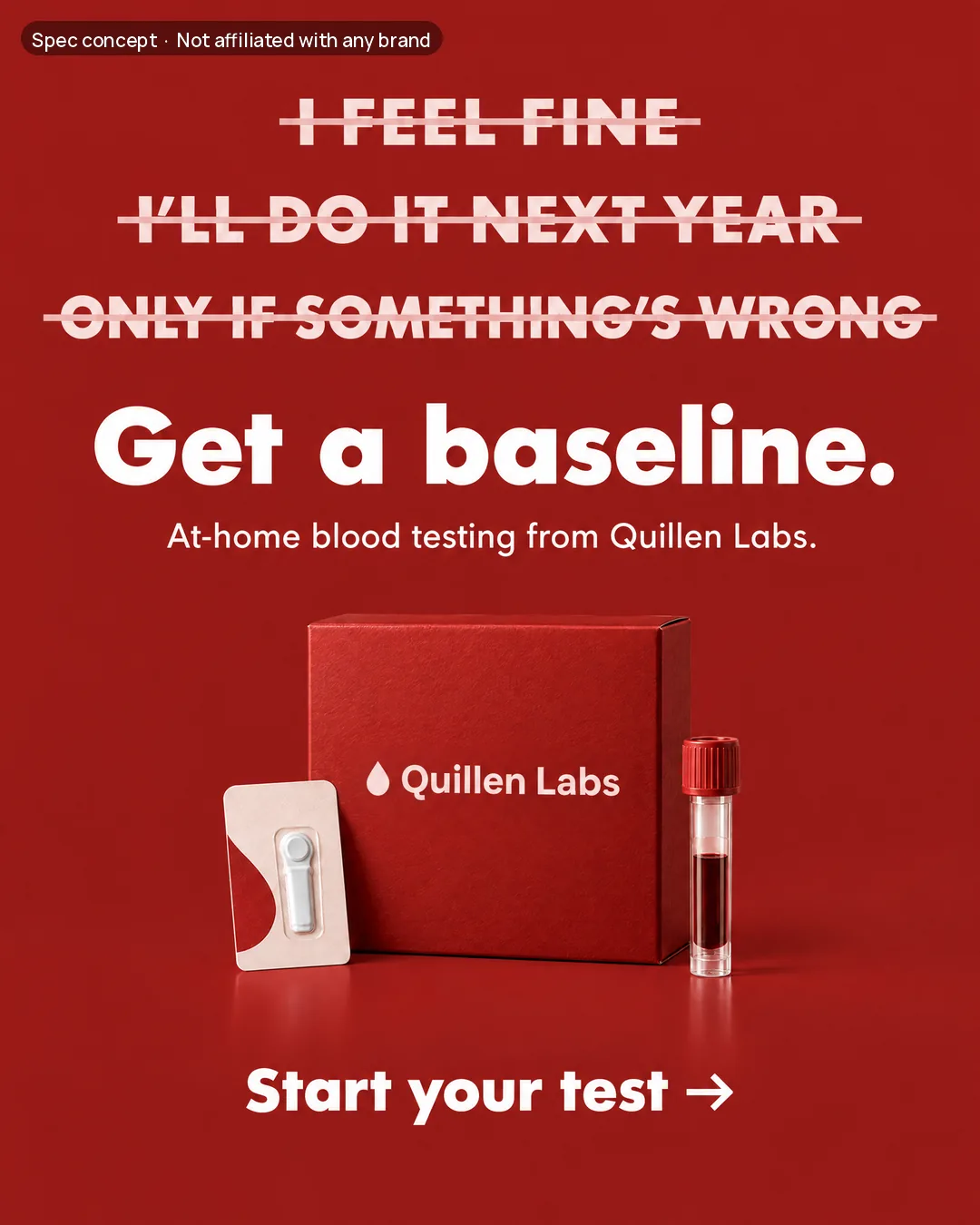
A baseline before you need one
- Stage:
- Problem aware
- Core desire:
- Have a reference point
- Mechanism:
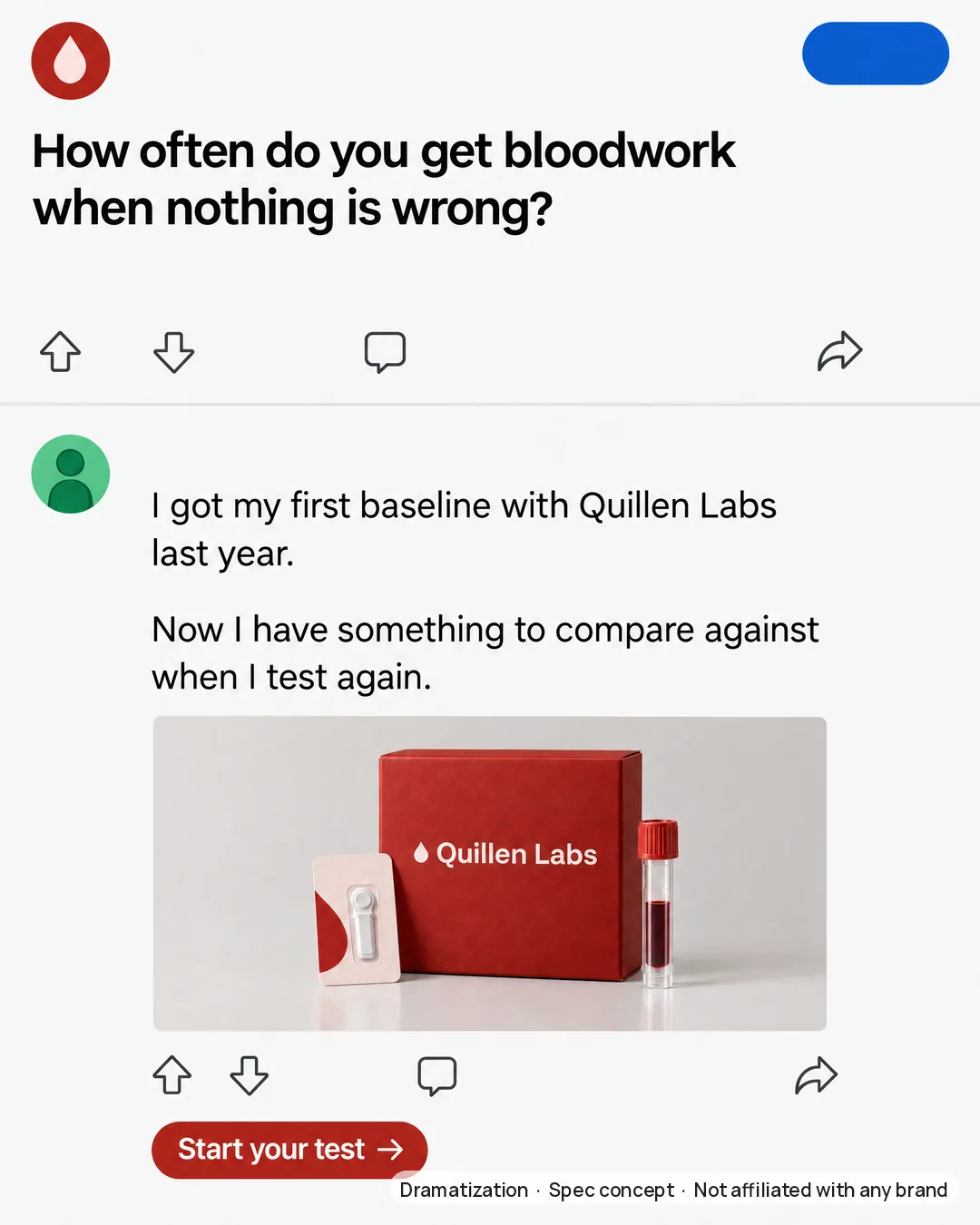
- Results stored so you can compare future tests.
- Objection:
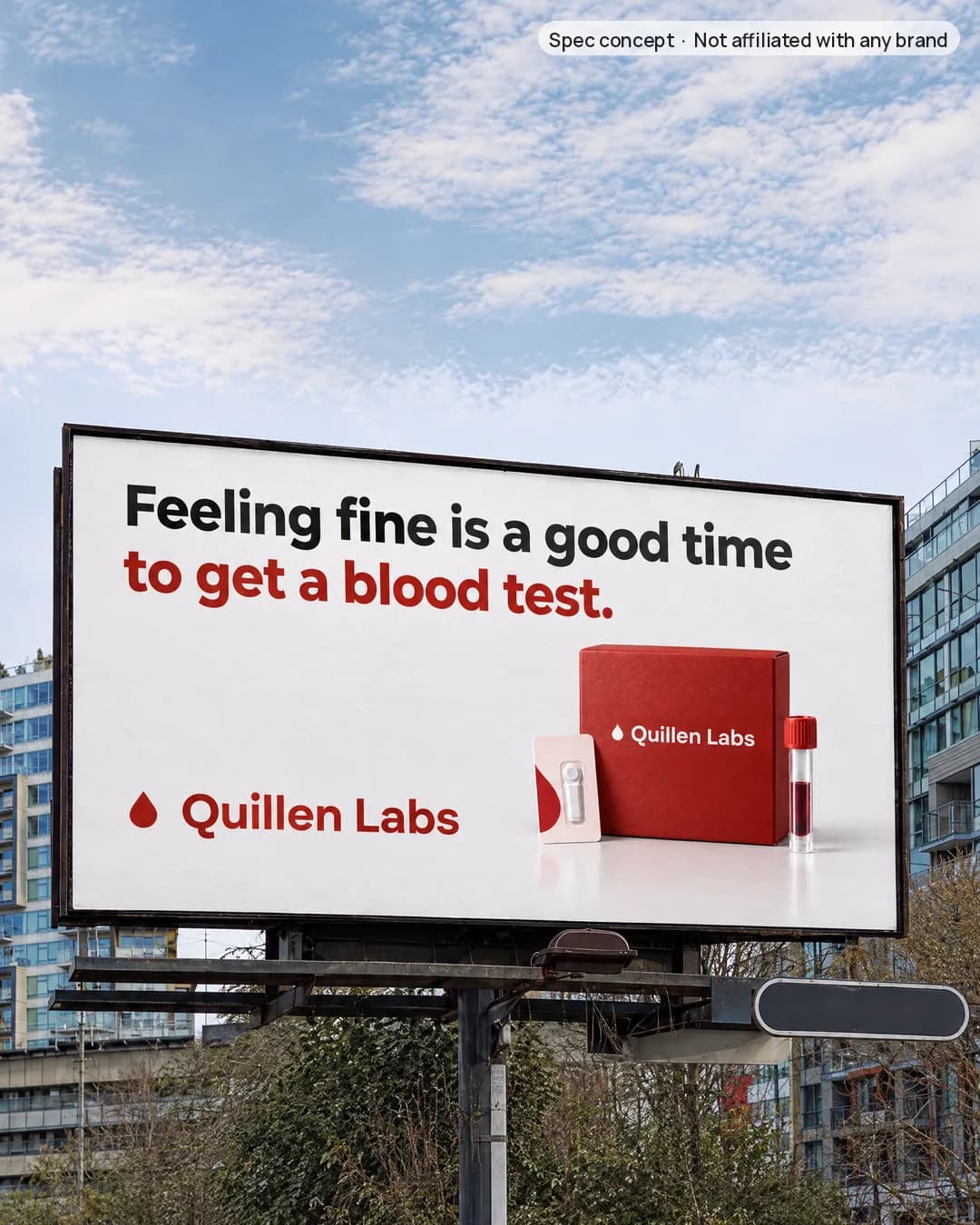
- Why test if I feel fine
- Hook:
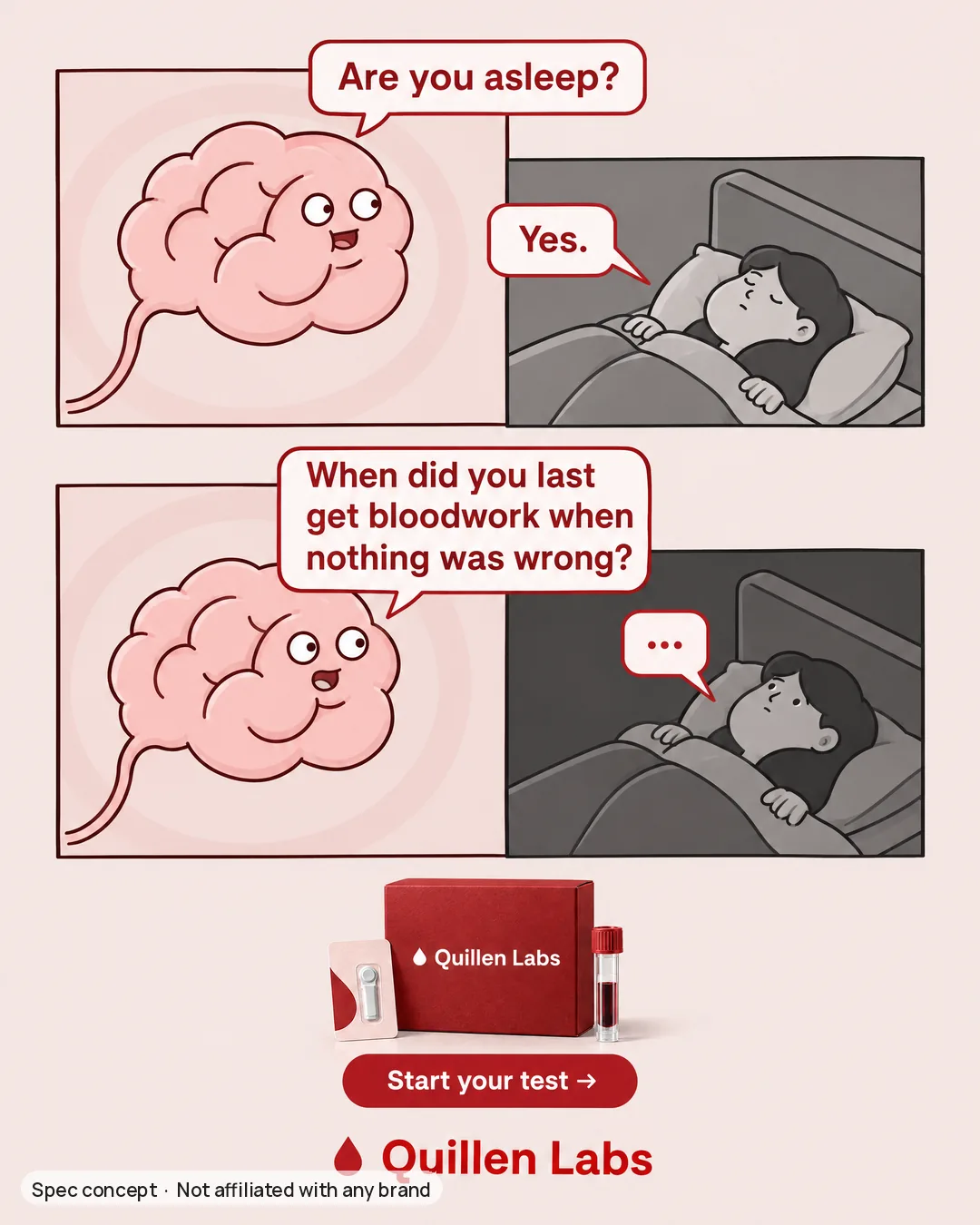
- The best time to get a blood test baseline is when nothing is wrong.
Family history
- Stage:
- Problem aware
- Core desire:
- Peace of mind
- Mechanism:
- A panel that includes your markers is a starting point to discuss with a provider.
- Objection:
- It won't tell me anything
- Hook:
- My dad's side has heart problems, so I wanted my own numbers.
Solution aware
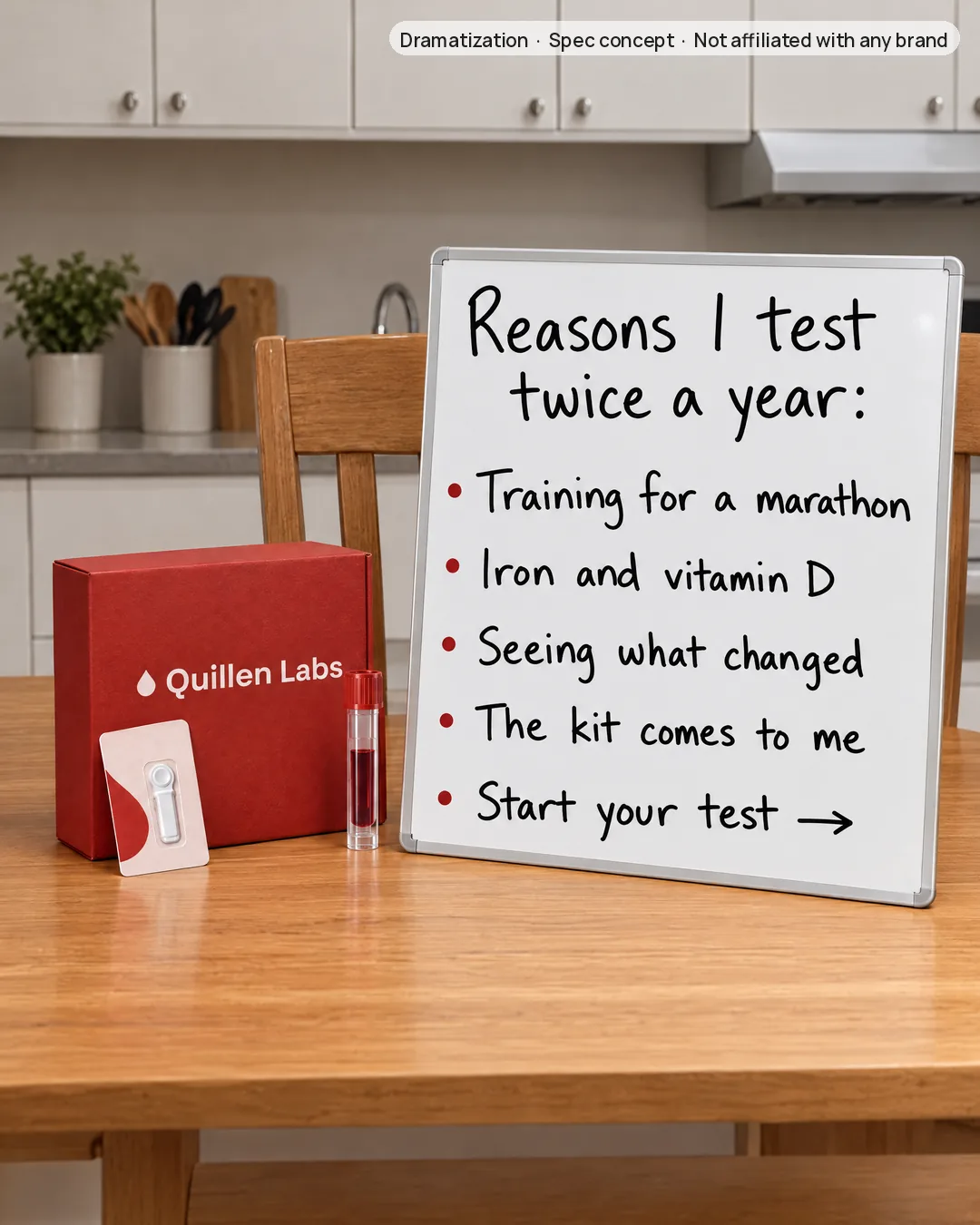
Data for training
- Stage:
- Solution aware
- Core desire:
- Train smarter
- Mechanism:
- Markers like iron and vitamin D are included. (if offered)
- Objection:
- Only sick people test
- Hook:
- Lifters test their bar weight every week and their blood never.
Questions to bring to a doctor
- Stage:
- Solution aware
- Core desire:
- Better conversations
- Mechanism:
- Results summary to share with your own doctor.
- Objection:
- My doctor won't care
- Hook:
- I brought my blood test results to my doctor and we had a much better appointment.
Product aware
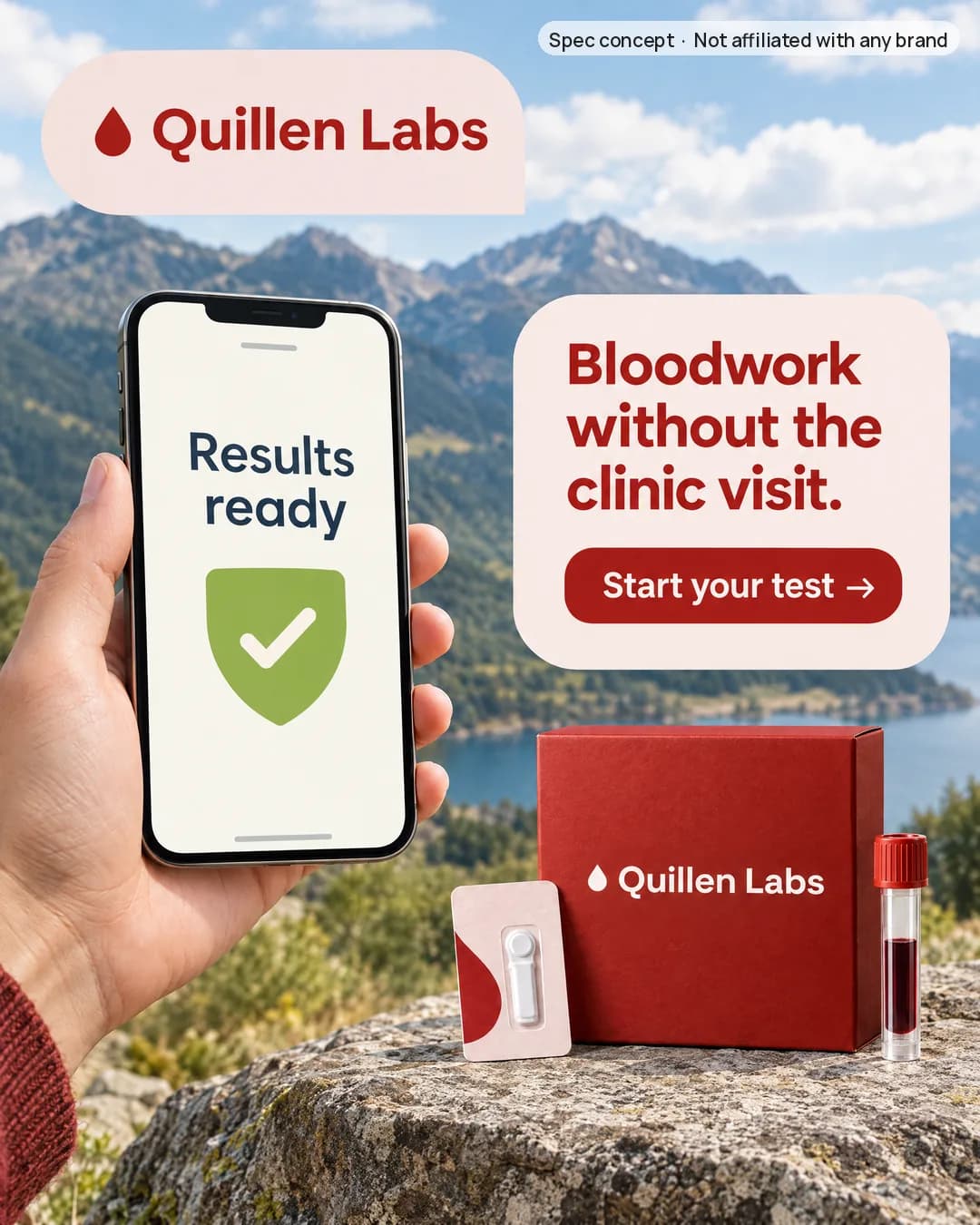
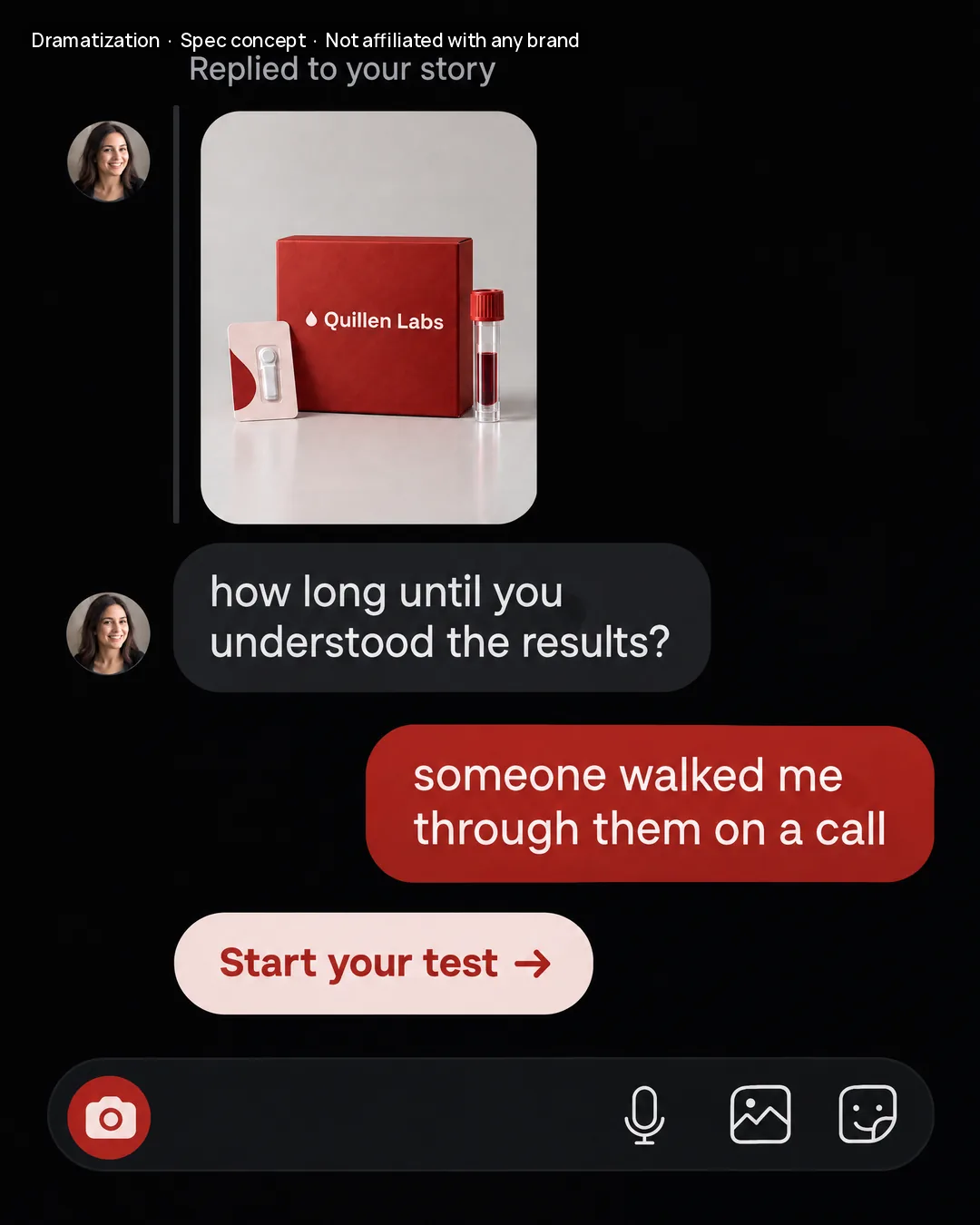
Results someone explains
- Stage:
- Product aware
- Core desire:
- Understand results
- Mechanism:
- A clinician reviews and explains results. (if offered)
- Objection:
- I'll get numbers I can't read
- Hook:
- Blood test results come with someone who explains them. That's the part people pay for.
What happens to your sample
- Stage:
- Product aware
- Core desire:
- Trust
- Mechanism:
- Processed at a CLIA-certified lab. (if offered)
- Objection:
- Where does my blood go
- Hook:
- Here's exactly where an at-home blood sample goes after you mail it.
Privacy
- Stage:
- Product aware
- Core desire:
- Control of data
- Mechanism:
- your privacy details.
- Objection:
- My data gets sold
- Hook:
- Who sees your blood test results is a fair question. Here's the answer.
Most aware
Test from home
- Stage:
- Most aware
- Core desire:
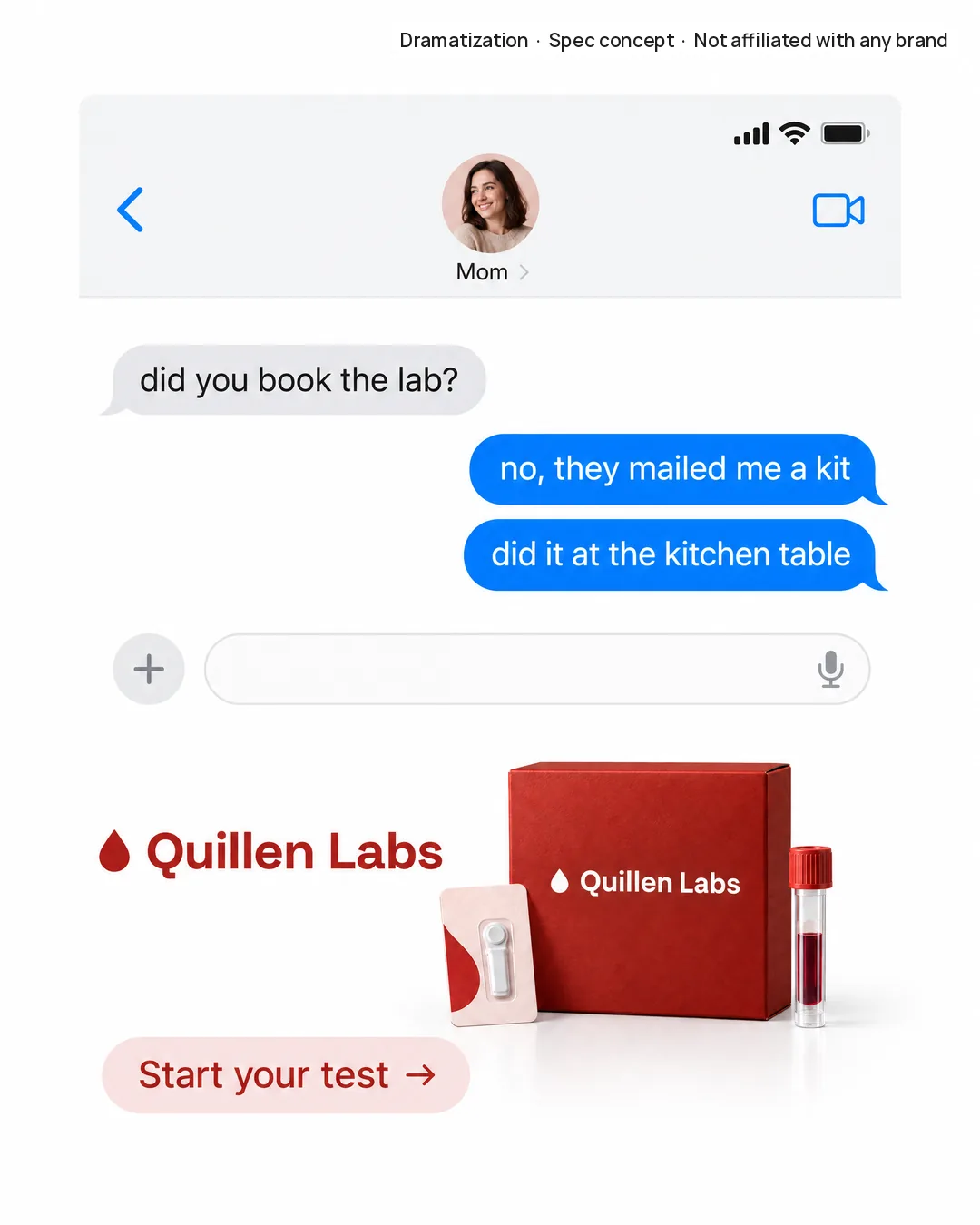
- Convenience
- Mechanism:
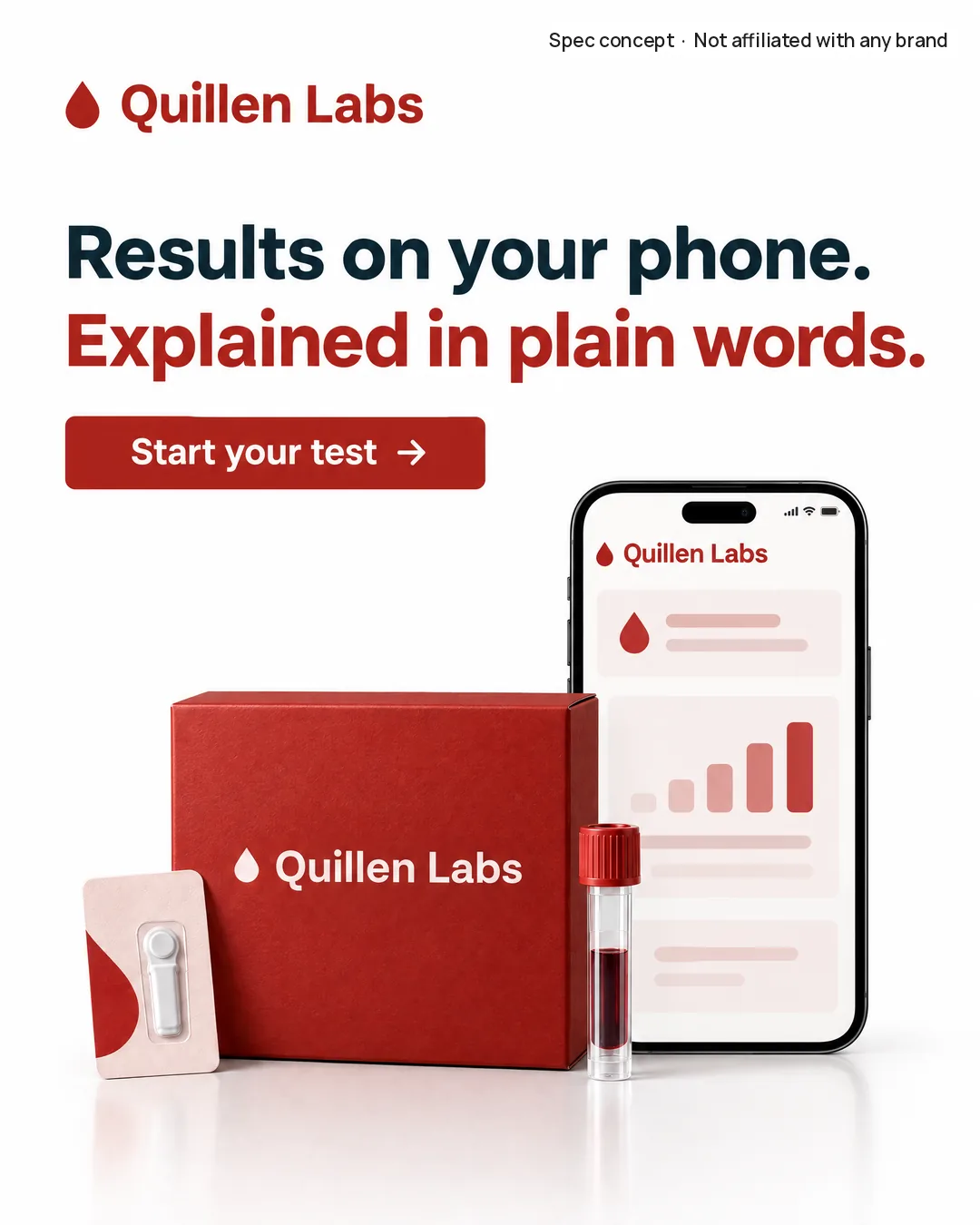
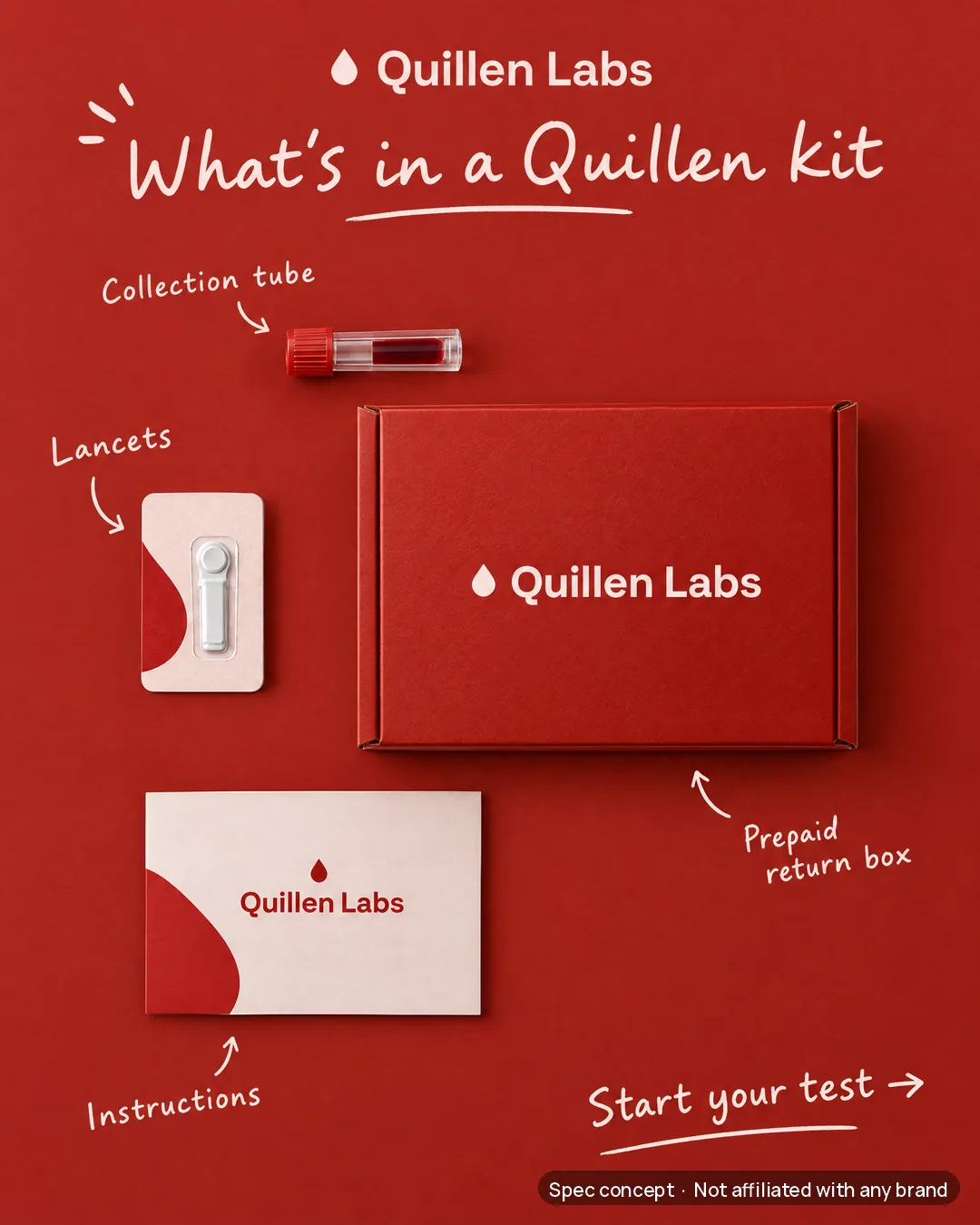
- Collect at home or at a partner lab your options.
- Objection:
- I hate labs
- Hook:
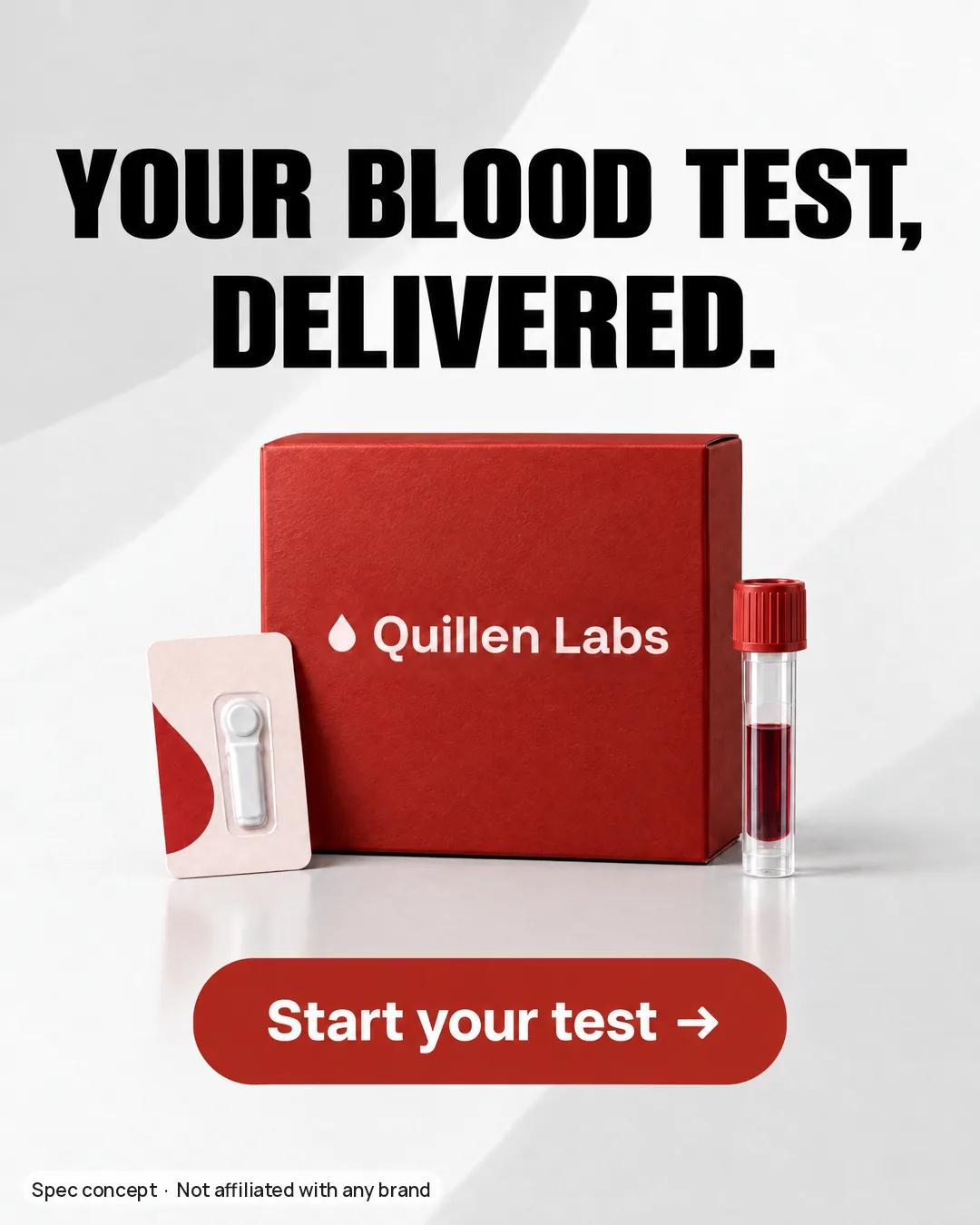
- Blood testing from home, mailed back in the same box.
Price per marker
- Stage:
- Most aware
- Core desire:
- Value
- Mechanism:
- your price for your panel size markers.
- Objection:
- It's too expensive
- Hook:
- Blood testing price, broken down per marker.
Retest and compare
- Stage:
- Most aware
- Core desire:
- Track change
- Mechanism:
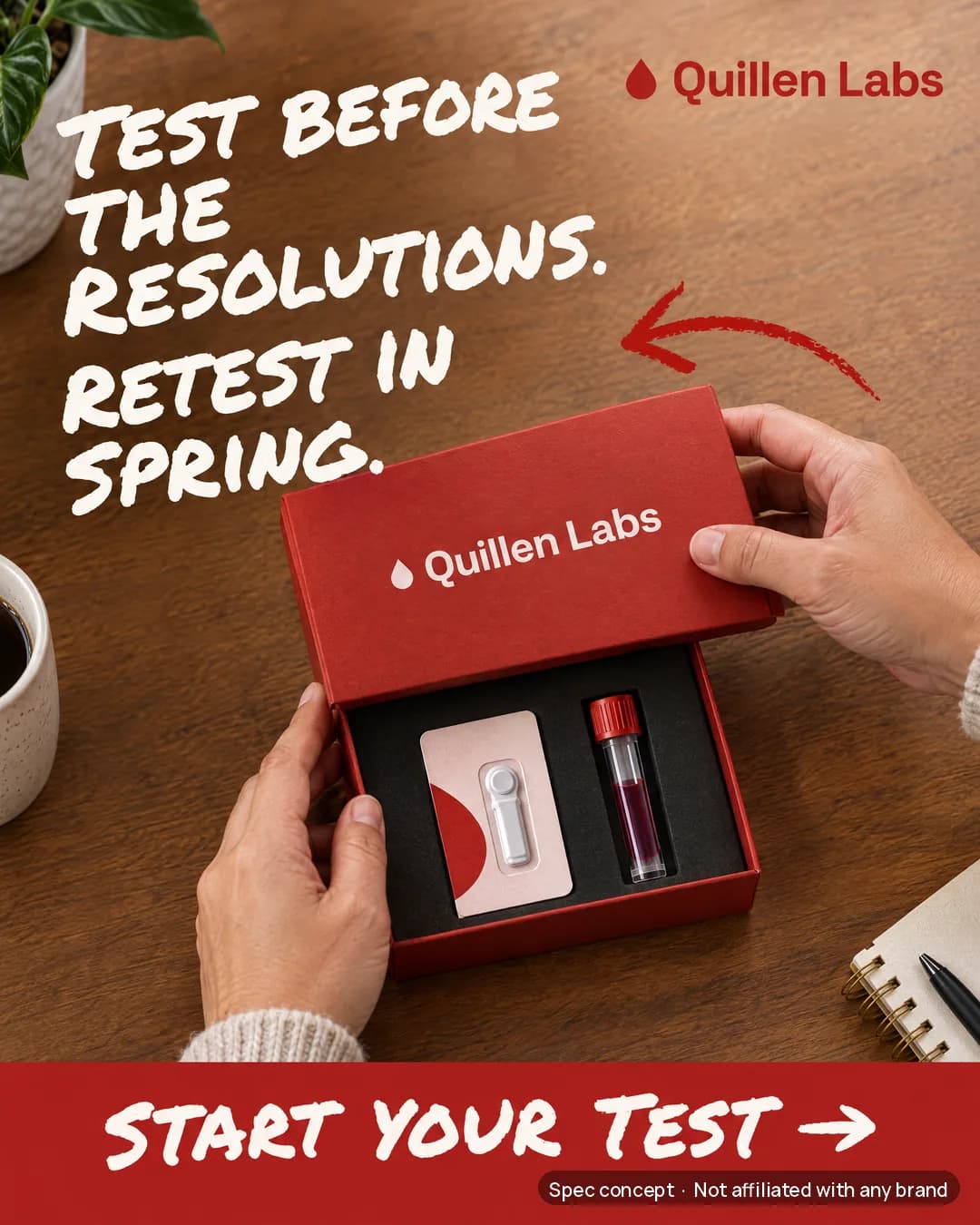
- Follow-up tests show trends. (if offered)
- Objection:
- One test is enough
- Hook:
- One blood test is a snapshot. Two is a trend.
How to use these angles
Pick one angle per batch, not one per ad. Read its desire and objection first: those two lines decide the script, the static headline and the landing page message. Use the stage to choose who sees it, then take opening lines from the At-home blood testing hooks page and check the copy on the ad compliance page before it runs.
An angle is worth a batch when its objection is one your audience actually raises. Read the objection line out loud: if your support inbox, intake answers or comments already contain it, the angle has a real job. If not, start with a different angle and keep this one for later.
Questions
What is an ad angle?
The reason a person should care, written down before any ad is made: the desire, the objection that stops them, the line that explains how the service works, and a hook. Each angle on this page lists all four.
How is a At-home blood testing angle tested?
In one batch: the angle is made into 10 ads, 5 videos in 5 formats and 5 statics, and tested in one ad set, so the result says something about the angle and not just one ad.
Can an ad ask the viewer if they have a condition?
No. Meta's Personal Attributes policy says ads must not assert or imply personal attributes, including physical or mental health and medical conditions. Meta rejects "Do you have diabetes?" and suggests "you" language without a personal attribute instead.
Source: Meta: Privacy Violations and Personal Attributes, checked 3 November 2026.
Can an opening line promise a result by a date?
Not without qualifiers. Meta's Health and Wellness policy bars promises of specific outcomes within a set timeframe without disclaimers or qualifiers.
Source: Meta: Health and Wellness ad policy, checked 3 November 2026.
Back to the At-home blood testing overview.
Same page for other verticals
- GLP-1 Weight Loss Ad Angles by Awareness Stage
- TRT Ad Angles by Awareness Stage
- ED Treatment Ad Angles by Awareness Stage
- Hair Loss Ad Angles by Awareness Stage
- Peptide Ad Angles by Awareness Stage
- Mental Health Ad Angles by Awareness Stage
- HRT and Menopause Ad Angles by Awareness Stage
- Birth Control Ad Angles by Awareness Stage
- Skin and Anti-Aging Ad Angles by Awareness Stage
- Medication Delivery Ad Angles by Awareness Stage
All brands shown are spec concepts made by Telehealth Media. They are not real companies.