Why You Should Find Winning Angles Not Winning Assets
When a telehealth ad wins, the instinct is to figure out what made that specific video or image work and make more like it. That instinct is pointing at the wrong thing. The winning asset is a container. The winning angle is what was inside it. Building more containers that look the same does not scale what actually worked.
Concepts shown are internal creative studies, not client campaigns.








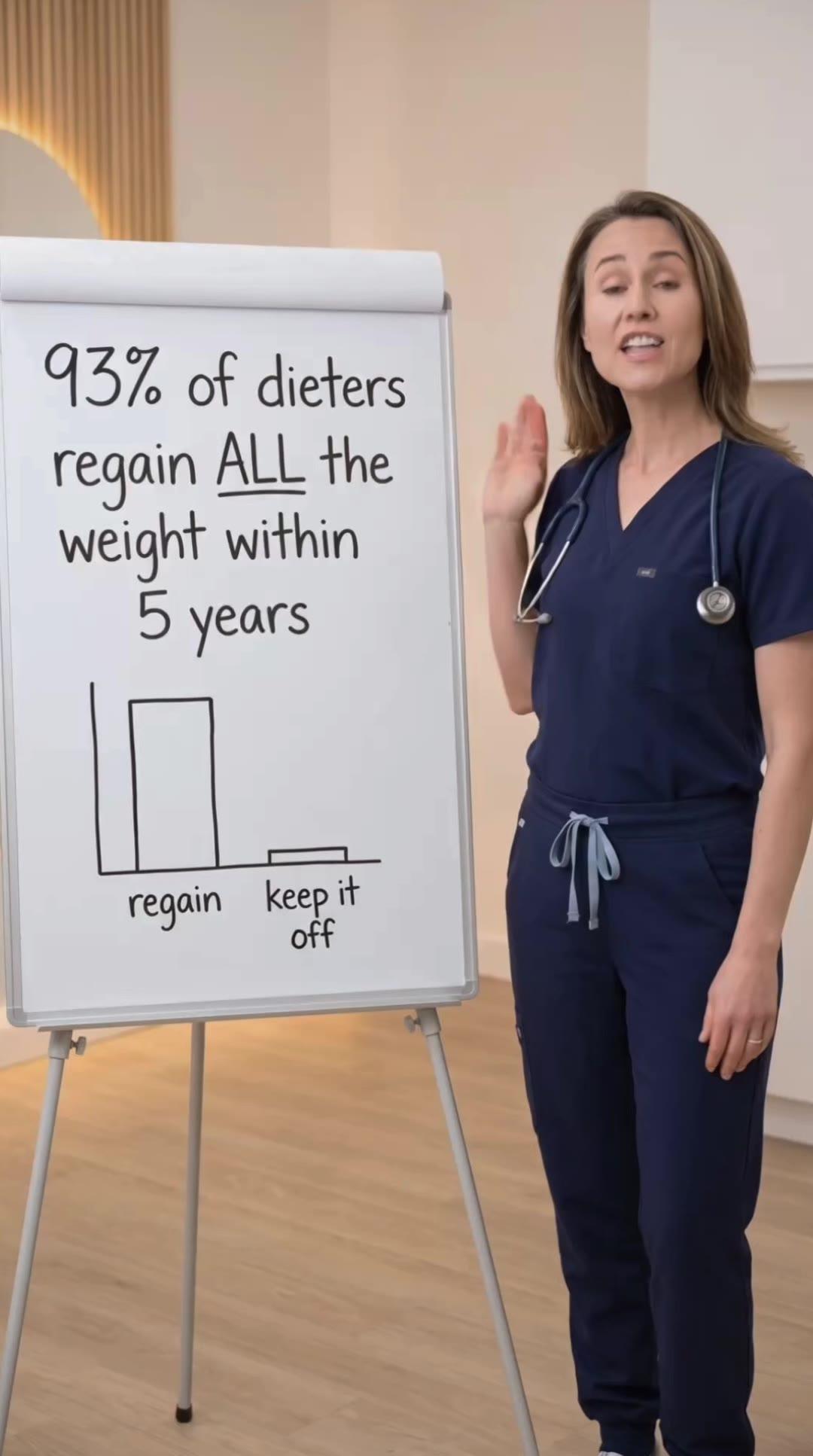
Winning angles in telehealth advertising are rare. Finding one is a genuine discovery. Most brands, when they find one, celebrate by producing more assets that look like the winning ad. Different creators, slightly different hooks, same underlying premise. The production volume rises. The performance trajectory continues upward for a few weeks and then plateaus. The brand interprets the plateau as creative fatigue and starts the cycle over.
What actually happened is that the winning angle reached its addressable audience efficiently. The demand premise resonated with the people who were in that specific emotional or situational state. There are only so many of those people, and once the algorithm found them, the angle was effectively fully saturated. Producing more assets with the same premise does not add new addressable audience. It just rotates the container for the same message in front of the same pool of people.
What a Winning Angle Actually Tells You
A winning angle tells you something specific about your audience. It tells you that a meaningful number of people in the market for what you offer are in the emotional or situational state the angle addresses. That is an audience insight, not just a creative insight. The creative happened to capture the insight well, but the insight existed before the creative and will continue to be true after the specific asset fatigues.
That audience insight is the asset. Not the video. Not the creator's face. Not the hook wording. The underlying premise — "people who are exhausted from trying and ready to give themselves permission to try a medical approach" or "people who are approaching a milestone and want to make a change before it" — is what your account knows about your audience that it did not know before. That knowledge is what you should be protecting and building on.
When you find a winning angle, the strategic question is not "how do we make more ads like this one?" It is "what does this winning angle teach us about the adjacent angles we should test next?" The discovery of a winning angle should accelerate angle exploration, not replace it with asset proliferation.
The Asset-Scaling Mistake
The asset-scaling mistake looks like this. A brand runs twelve ads in a testing sprint. One ad significantly outperforms the others. The team identifies the winning elements: the creator's style, the hook phrasing, the length and pacing. The next sprint produces eight new ads that all replicate those elements. Several perform reasonably well. The team interprets this as validation of the scaling strategy.
What is actually happening is that all eight new ads are running the same angle as the original winner. They are all speaking to the same audience segment. The initial winner already identified that audience efficiently. The new ads are circling the same pool with different wrappers. Each new asset adds some new viewers at the margin — people who respond better to this creator than that one, or to this hook wording versus that one — but the core audience segment is the same one the original winner already reached.
The performance of the scaled assets may be good relative to the original testing batch, but it is almost always lower than the original winner, and it continues declining as the shared audience saturates. The team makes a second round of variations. Performance continues to decline. The diagnosis is "the angle is fatiguing," which is accurate but arrives too late to be useful. The asset-scaling decision prevented the brand from investing that production budget in genuinely new angle discovery.
Concepts we ship across every awareness stage.
See the work →How to Extract the Angle from a Winner
Extracting the angle from a winning asset requires a deliberate analytical step that most teams skip. When an ad wins, convene the creative team and the media buyer for a brief diagnostic session. Watch the ad together. Ask one question: who is this person, and what is their specific situation that made this ad work for them?
The answer should be stated in terms of the audience, not the creative. Not "the hook was strong" or "the creator was relatable." The answer should describe a person: "this is a woman in her early forties who has been on and off diets for a decade, is feeling embarrassed about how her relationship with food has affected her self-perception, and is in a moment of finally being willing to try something medical because the self-directed approaches have stopped working." That is the angle. The creative executed it well. The angle is the finding.
Write that description down. That is the angle record for this discovery. File it alongside the performance data. Now ask the follow-up question: what are the adjacent demand premises that a person in this situation might also respond to? That second question is where the next testing sprint comes from. Not "make more ads like the winner" but "what else does the type of person who responded to the winner need to hear?"
Using the Angle Insight to Generate New Angles
A winning angle is a foothold. It identifies a real audience segment that is responsive to paid acquisition. From that foothold, the creative program can move in two directions. One is depth: explore different angles within the same audience segment. What else does this person care about? What else might bring them to conversion? What aspects of the service would resonate with them that the winning angle did not address?
The other direction is breadth: find adjacent audience segments that share some characteristics with the winning angle's audience but are meaningfully distinct. The woman in her forties who is exhausted from self-directed approaches is one audience segment. The woman in her forties who is not exhausted but is approaching a life milestone — a birthday, an event, a transition — and wants to look and feel her best for it is an adjacent but independent segment. Both are women in a similar age range considering medical weight management, but their emotional states and decision drivers are different. They require different creative.
The angle insight from the winner gives you the vocabulary to articulate these adjacent segments precisely. That precision is what makes the next sprint more efficient than the previous one. You are not guessing. You have a working theory of the audience, informed by real performance data, that guides which premises are worth testing next.
The Correct Role for Asset Variation
Producing multiple assets for a proven angle is not wrong. It becomes wrong when it replaces angle exploration rather than complementing it. Once an angle has proven out, it is worth testing format variations — does this angle land better in long-form or short-form, in UGC or brand voice, with a specific creator type or a different one? Those tests optimize delivery efficiency for a known premise. That is legitimate work.
The key is that format variation within a winning angle is secondary creative work. It should run in parallel with primary creative work — developing and testing new angles — not instead of it. A healthy production calendar allocates roughly equal effort to proving out new angles and optimizing delivery for proven ones. When the ratio tips too far toward optimization of known angles, the program stops discovering new audience territory and the ceiling on growth drops.
The creative program's job is not to produce the best possible version of a known angle indefinitely. It is to continuously map the audience's demand landscape, finding new segments and new premises that expand the addressable pool. Winning angles are milestones in that mapping project, not endpoints. Building on them as audience insights — rather than mining them as production templates — is the discipline that separates a creative program that compounds from one that gradually declines.
Related Articles
What Independent Demand Angles Are and Why They Matter
A precise definition of independent demand angles and how to find them.
How to Expand and Scale a Winning Angle
The process for expanding on what made a winning angle work.
Why 100 Similar Ads Fail and 10 Varied Ones Win
What happens when brands scale assets instead of angles.
Why Creative Variety Beats Volume for Telehealth Ads
The case for genuine angle variety over raw creative volume.
Ready to build a testing system that scales?
A 30-minute call. We audit your creative approach and show you exactly what a complete angle-format-hook system looks like for your vertical.