The Creative Feedback Loop Between Agency and Media Buyer
The creative feedback loop between agency and media buyer is one of the most important and most broken systems in telehealth advertising. When it works, creative programs improve with every sprint. When it breaks, brands produce more and learn less until the plateau becomes a cliff.
Concepts shown are internal creative studies, not client campaigns.








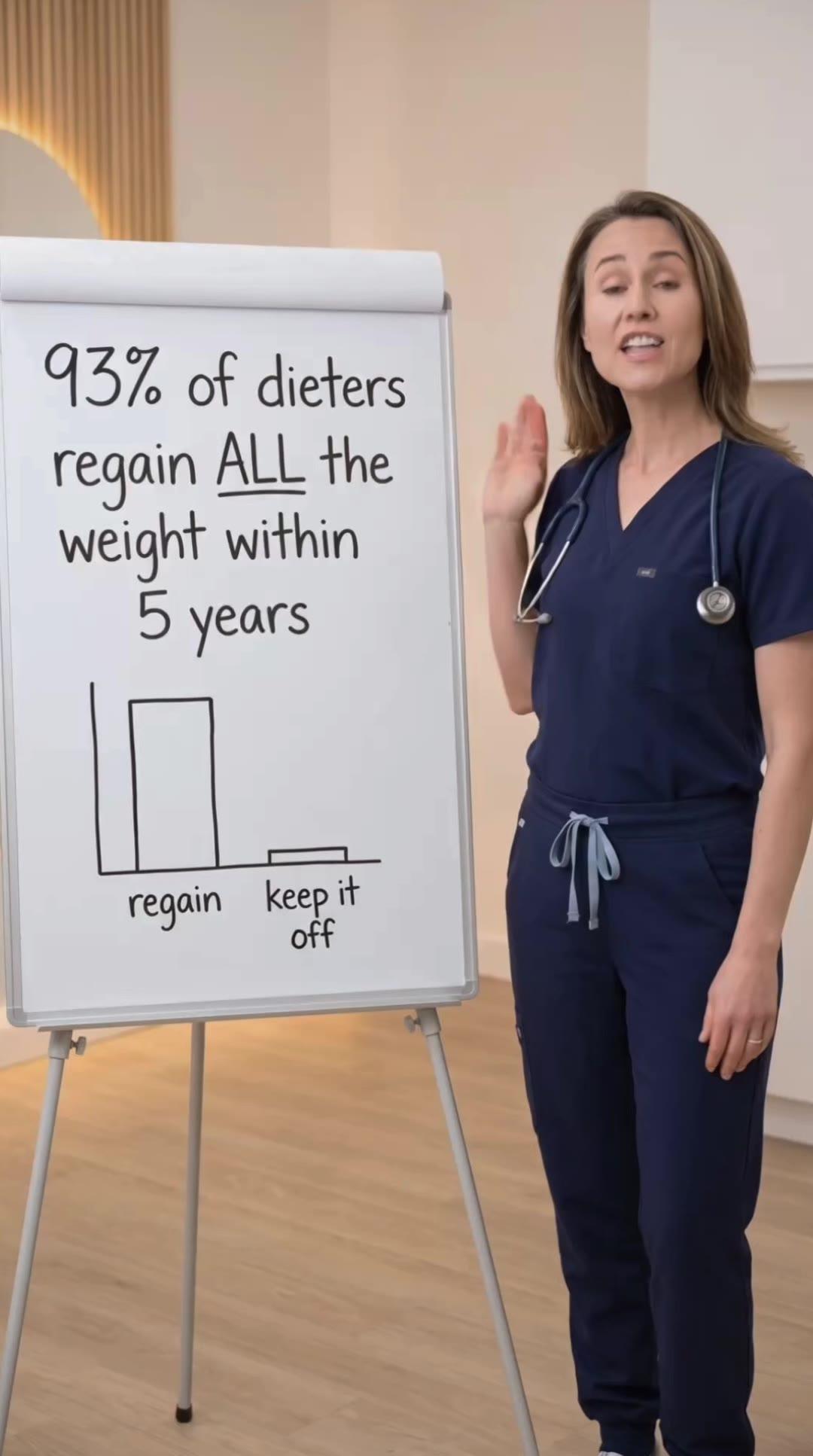
In most telehealth advertising setups, the creative agency and the media buyer are different entities. The agency produces the creative. The media buyer runs it. Each has access to information the other needs. The agency knows what it was trying to accomplish — the angle, the archetype, the demand premise behind each piece. The media buyer knows what actually happened — which ads got traction, which fatigued quickly, which generated the wrong type of click.
When that information moves in both directions — agency to media buyer on strategy, media buyer to agency on results — the loop is closed and the program learns. When it only moves one way, or not at all, the program keeps producing without improving.
How the Loop Breaks
The most common break is structural. The agency delivers creative. The media buyer runs it and generates performance data. The performance data stays in the media buyer's reporting dashboard. The agency never sees it. The next briefing cycle starts, and the agency produces new creative without any information about what the previous work did or why.
This is not negligence. It is an organizational default. Performance data lives in the media platform. It belongs, in practice, to whoever manages the ad account — typically the media buyer or in-house media team. Unless someone actively bridges the data to the creative team, the information stops at the reporting layer and never reaches the people who would know what to do with it.
A second, subtler break is translation failure. The media buyer has the data but communicates it in execution terms. "Ad C got a 2.1% CTR. Ad B got 0.9%. Make more like Ad C." The agency hears "we liked the format and the creator." They do not hear "the demand premise in Ad C resonated more strongly." The lesson extracted is about execution rather than strategy. The loop ran but carried the wrong signal.
A third break is timing. The media buyer reviews performance monthly. The agency briefs and produces on a biweekly cycle. By the time performance data from the first sprint informs the brief for the third sprint, the market has shifted, the winning creative has fatigued, and the data is no longer current. The loop is too slow to be useful.
What a Healthy Loop Looks Like
A healthy creative feedback loop has three components: regular shared access to performance data, a translation layer that converts execution data into strategic insight, and a timing cadence that keeps the signal current.
Shared access means the creative team can see how their work is performing, not just the aggregate numbers but the angle-level breakdown. Which demand premises are resonating? Which are falling flat? Which ads are driving the right type of conversion, not just click volume? This data should be available to the creative team in a format they can act on — not a raw platform export, but a synthesized view organized by angle and archetype.
The translation layer is the work of connecting performance data to creative hypotheses. A media buyer who says "Ad C worked, make more like it" is not closing the loop. A media buyer who says "Ad C worked, and based on how the audience that converted from it looks, we think the 'permission to try medical intervention' angle is resonating with women in the 38-52 demographic who have been in the self-help cycle for years — let's test two more angles in that territory" is doing translation. That is the information the agency can act on strategically.
The timing cadence should match the pace of the creative program. If the team is producing and launching new creative every two weeks, the performance review needs to happen weekly. If it happens monthly, half the production cycles are running without guidance from the previous sprint's results.
Concepts we ship across every awareness stage.
See the work →The Role of Angle-Level Reporting
Angle-level reporting is what makes the feedback loop useful. When performance data is organized only by asset — ad ID, video name, creative set — the feedback loop carries execution signals. When it is organized by angle, it carries strategic signals.
Angle-level reporting requires that someone tag each ad with its underlying demand premise at the time of launch. This sounds like overhead, but it is a minimal investment. A naming convention that includes the angle code (AG01, AG02, etc.) or a tagging system in the platform is enough. Once tagged, any standard performance report can be sliced by angle, and the question "which demand premises are working?" becomes answerable.
When the feedback loop runs on angle-level data, it becomes self-improving. Each sprint produces angle performance data. That data informs which angles to double down on, which to retire, and which adjacent angles to test next. The creative program develops a theory of its audience — tested, validated, continuously updated — rather than just accumulating a library of assets.
When Agency and Media Buyer Are the Same Entity
In some telehealth setups, especially at earlier stages of growth, one partner handles both creative strategy and media buying. This collapses the loop — there is no translation problem when the same person holds both sides of the feedback. But the discipline of the loop still matters. It is easy for a single person handling both functions to slip into execution-level optimization without building the strategic record of what the audience has responded to and why.
The recommendation for integrated teams is to maintain the same documentation discipline that a separated structure requires. Run brief reviews before production. Run angle-level performance reviews after each sprint. Write down what you learned about the audience. That documentation is the proof that the loop is actually running, not just happening by intuition.
Rebuilding a Broken Loop
If the loop in your current setup is broken — if the creative agency has never seen performance data from their work, or if performance reviews are happening monthly at the asset level — the rebuild starts with a single shared session. Bring the creative lead and the media buyer into the same room with the same data. Walk through the last three months of creative performance organized by angle, not by asset. Ask the creative team what they were trying to accomplish with each piece. Ask the media buyer what the data says about what actually happened.
That single session will usually surface more strategic insight than the last three months of reporting because it forces translation. The creative team learns what the audience responded to. The media buyer learns what the creative team was actually trying to test. The gap between the two is usually the diagnosis.
Commit to running that session monthly at minimum, weekly if the creative volume warrants it. The loop does not close itself. It requires a deliberate structure and a shared language — angle-level vocabulary, demand premise thinking, strategic hypotheses tested through production. Building that structure is the work of making the feedback loop function as designed.
Related Articles
How to Brief a Creative Partner for Clean Testing
What briefs need to contain to generate angle-level learning rather than execution variance.
Building a Creative Testing Architecture for Telehealth
The structural layers of a creative testing program that compounds over time.
Why You Need a Creative System Not Just a Creative Agency
The structural difference between what an agency delivers and what a system builds.
Ready to build a testing system that scales?
A 30-minute call. We audit your creative approach and show you exactly what a complete angle-format-hook system looks like for your vertical.